
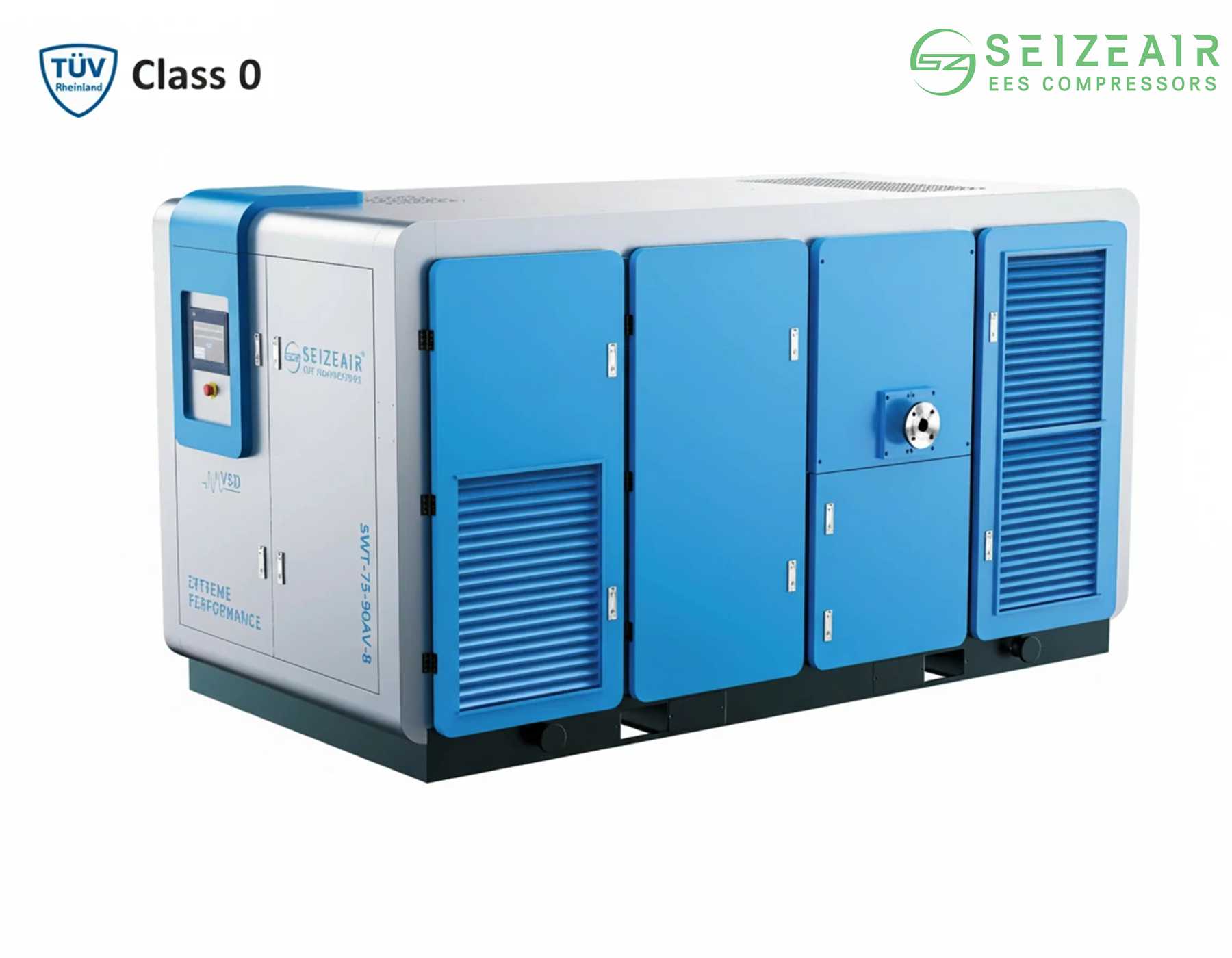
Selecting the right oil free screw compressor for pharmaceutical industry operations is critical to protecting drug integrity, maintaining ISO 8573-1 Class 0 air purity, and passing strict regulatory audits.
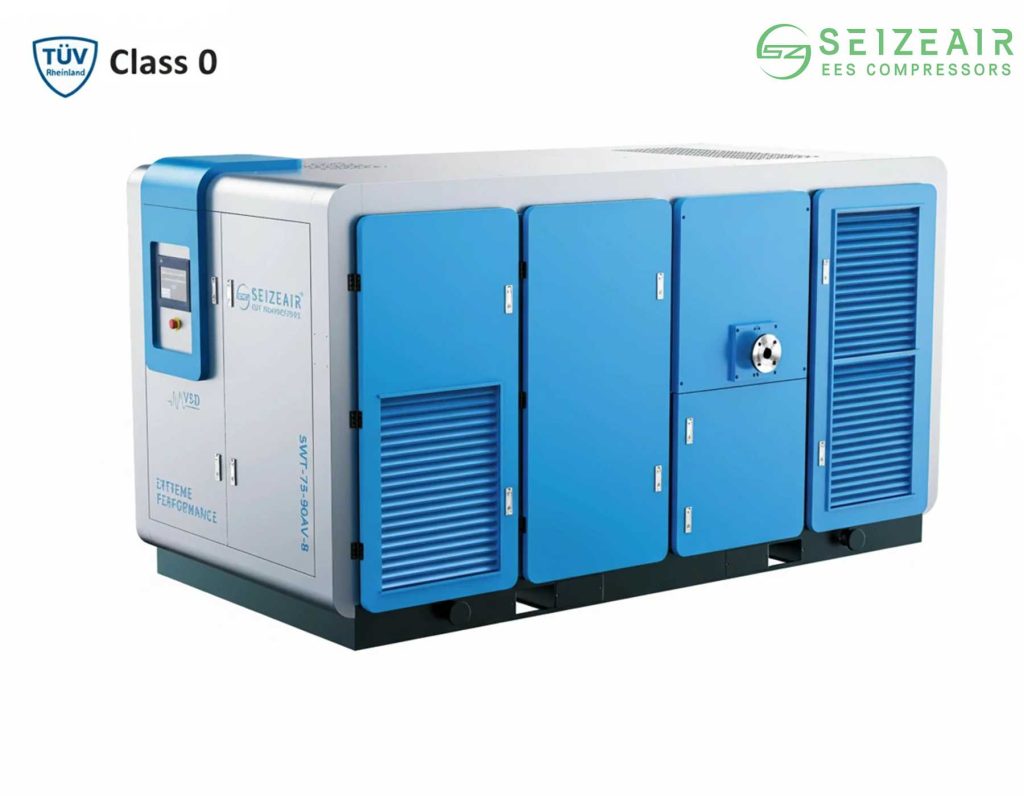
Why Is Compressed Air Quality Critical in Pharmaceutical Manufacturing?
In pharmaceutical facilities, compressed air functions as a utility, a conveying medium, and often a direct product contact ingredient. Unlike standard manufacturing plants where trace oil or moisture only causes mechanical wear, oil contamination in drug manufacturing leads to batch destruction, product recalls, and severe regulatory non-compliance under FDA cGMP (Current Good Manufacturing Practice) standards.
Pharmaceutical processing requires continuous air delivery free from three major contaminants:
- Hydrocarbons and Oil Aerosols: Traces of oil can react with active pharmaceutical ingredients (APIs), changing chemical composition or ruining physical appearance (such as causing spots on tablet coatings).
- Microbial Organisms: Bacteria, fungi, and spores thrive in moist air lines, introducing biological contaminants into sterile processing areas.
- Particulate Matter and Water Vapor: Dessicated dust and liquid water cause pneumatic valve failures and ruin powdered formulations by causing clumping during tablet pressing or capsule filling.
Understanding these risks makes it clear why selecting an oil free screw compressor for pharmaceutical industry applications is non-negotiable for site engineers and plant managers.
What Air Purity Standards Apply to Pharmaceutical Compressors?
The international baseline for compressed air purity is defined by ISO 8573-1:2010. When specifying compressors for drug manufacturing, two primary purity classes dictate equipment selection: Class 0 and Class 1.
ISO 8573-1 Air Purity Breakdown
| ISO 8573-1 Class | Total Oil Concentration (Liquid, Aerosol, Vapor) | Maximum Pressure Dew Point | Particle Count Limit per m3 (0.1 – 0.5 micron) |
| Class 0 | 0.00 mg/m3 (Strictly tested beyond Class 1) | Customer/Process Specified | Defined by user & manufacturer (typically zero) |
| Class 1 | <= 0.01 mg/m3 | <= -70 deg C (-94 deg F) | <= 20,000 |
| Class 2 | <= 0.1 mg/m3 | <= -40 deg C (-40 deg F) | <= 400,000 |
| Class 3 | <= 1.0 mg/m3 | <= -20 deg C (-4 deg F) | Not specified |
Crucial Distinction: ISO Class 0 does not simply mean “zero oil added.” It requires an independent laboratory testing certification showing that no measurable trace of oil exists in any phase (liquid, aerosol, or vapor) coming out of the compressor element.
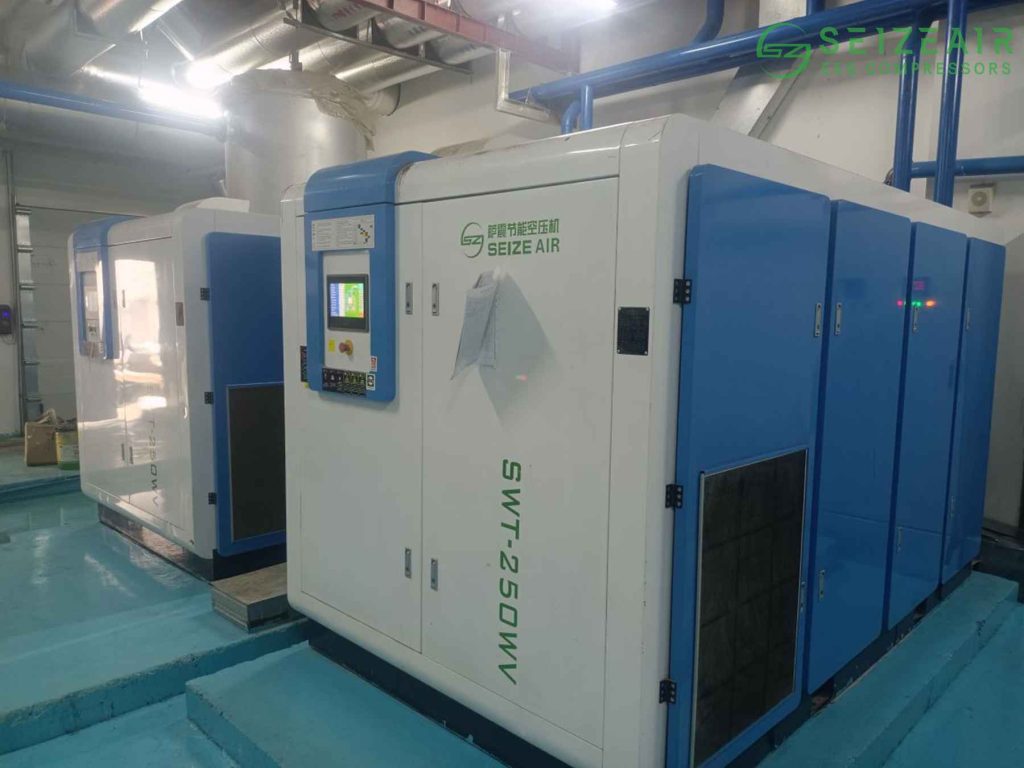
Manufacturers like Seize Air build dedicated dry-screw and water-injected oil-free compressors certified to strict Class 0 thresholds to guarantee zero oil risk across critical production lines.
Dry Screw vs. Water-Injected Screw Compressors: Which Is Better?
When choosing an oil free screw compressor for pharmaceutical industry setups, you will encounter two primary technical designs: Dry Oil-Free Screw and Water-Injected Oil-Free Screw. Both remove lubricating oil from the compression chamber, but they manage thermal dissipation and sealing differently.
1. Dry Oil-Free Screw Compressors
Dry screw designs use two high-precision intermeshing rotors with special anti-friction coatings (such as PTFE or Ultra-Coat) that never physically touch. Because air is compressed without liquid sealing:
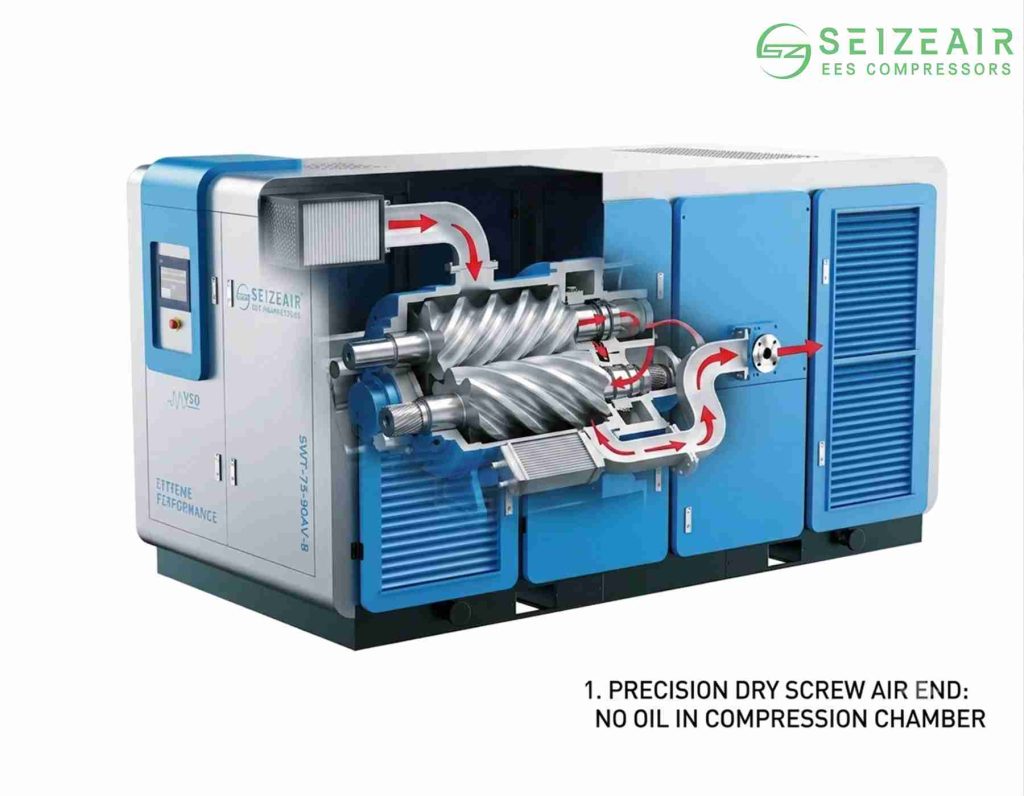
- Thermal buildup requires a two-stage compression process with an intermediate intercooler for pressures above 3 bar.
- Operating speeds are high (typically 8,000 to 20,000 RPM).
- Air output is 100% free of added liquids, though downstream desiccant dryers are still required to handle atmospheric humidity.
2. Water-Injected Oil-Free Screw Compressors
Water-injected units inject purified water into the compression chamber. The water acts as a natural coolant, lubricant, and seal:
- Near-isothermal compression reduces thermal stress, allowing single-stage operation up to 8–10 bar.
- Lower internal temperatures mean lower rotor speeds, extending bearing lifetime and raising energy efficiency.
- Requires closed-loop water filtration and reverse osmosis (RO) treatment to prevent mineral buildup inside the air end.
Comparing Compression Technologies
| Feature | Dry Rotary Screw | Water-Injected Rotary Screw | Oil-Lubricated + Filtration |
| Risk of Oil Contamination | Absolutely Zero | Absolutely Zero | High Risk (Filter failure causes blowby) |
| ISO 8573-1 Rating | Class 0 Certified | Class 0 Certified | Class 1 at best (depends on filter maintenance) |
| Compression Stages | Typically 2 Stages | Typically 1 Stage | 1 Stage |
| Thermal Efficiency | Moderate | High (Isothermal behavior) | High |
| Upfront Capital Cost | High | Medium to High | Low |
| Maintenance Profile | Rotor recoating, timing gears | Water purification filters, reverse osmosis | Frequent filter & oil element replacements |
How Are Oil-Free Compressors Used in Pharmaceutical Processing?
Compressed air touches almost every stage of drug manufacturing. Matching compressor sizing and dew-point targets requires evaluating specific applications:
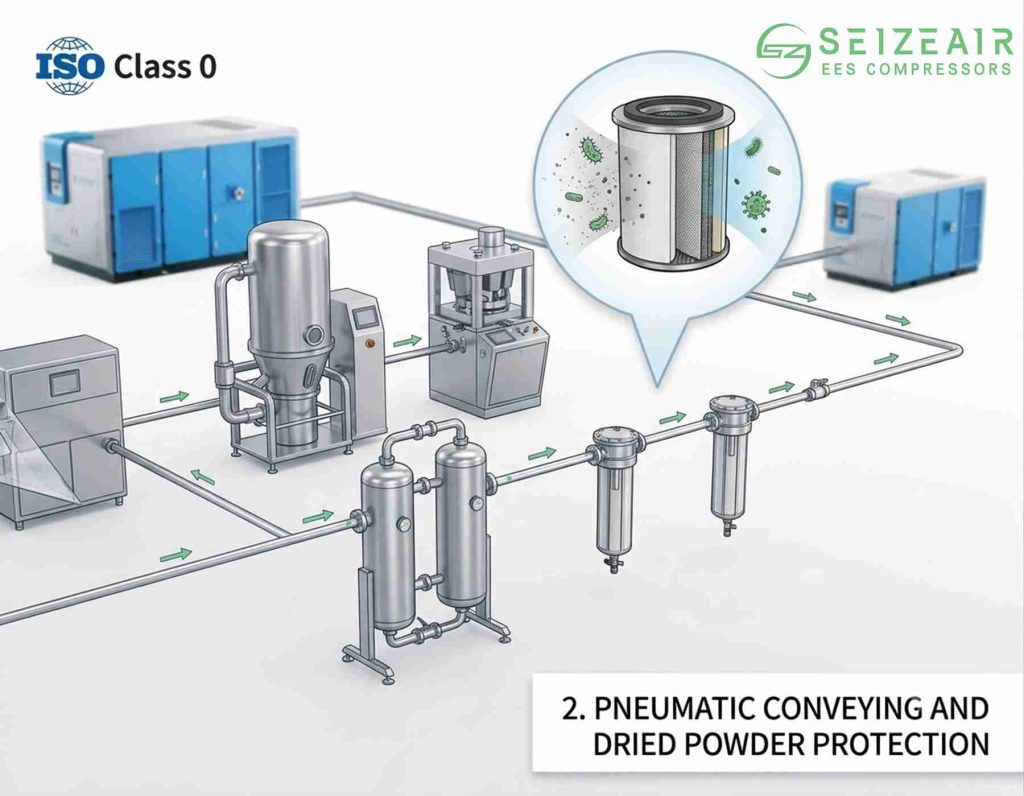
- Tablet Compression and Fluid Bed Drying: Compressed air powers high-speed tablet presses and fluidizes granules during drying. Any trace moisture leads to sticky powders, uneven dosages, or tablet capping.
- Pneumatic Conveying of Active Ingredients: APIs and raw excipients are moved through sealed piping using clean air pulses. Oil contamination here contaminates entire production lots.
- Blow-Fill-Seal (BFS) Packaging: Liquid medications, eye drops, and vials are filled and sealed in an automated continuous process. The air shaping the plastic bottles must be Class 0 sterile to preserve shelf life.
- Sterile Fermentation and Aeration: Biopharmaceutical processes require continuous oxygen/air supply to bioreactors. Organic contaminants or hydrocarbon vapours inhibit cellular growth and kill bacterial cultures.
- Cleanroom HVAC and Tool Actuation: Cleanroom controls use compressed air to actuate isolation valves, maintain positive room differential pressure, and operate robotic filling lines.
Key Technical Criteria for Selecting Your Pharmaceutical Compressor
To size and specify the ideal oil free screw compressor for pharmaceutical industry facilities, evaluate these primary engineering factors:
1. Air Flow (CFM / m3/min) and Pressure (Bar / PSI)
Calculate your total concurrent air demand by summing all equipment consumption, adding a 15-20% safety buffer for future expandability and system purge losses.
- Standard pharma instrument air operates around 7 to 8 bar (100 to 115 PSI).
- High-demand pneumatic conveying systems may require up to 10 bar.
2. Energy Efficiency: Fixed Speed vs. Variable Speed Drive (VSD)
Pharmaceutical plants rarely operate at 100% full capacity around the clock. Air demand fluctuates depending on shift schedules and batch processing cycles.
- Fixed Speed Compressors: Best suited for baseline load operations where demand remains continuous and flat.
- Variable Speed Drive (VSD) Compressors: VSD systems adjust motor speed directly to match real-time air consumption. A VSD unit can cut overall energy expenses by 30% to 50%, yielding a quick return on investment considering compressed air accounts for over 70% of a compressor’s total lifecycle cost.
Advanced VSD oil-free designs from trusted brands like Seize Air incorporate permanent magnet (PM) motors with IE4 or IE5 efficiency ratings, keeping operational costs low over years of continuous running.
3. Downstream Air Purification Equipment
A Class 0 compressor delivers oil-free air, but ambient air still contains water vapor, dirt particles, and airborne microorganisms. Complete the air treatment train with:
- Heat-of-Compression (HOC) or Twin-Tower Desiccant Dryers: Achieves pressure dew points of -40 deg C to -70 deg C, preventing microbial proliferation.
- Sterile Grade Micro-Filters: Retains micro-particles down to 0.01 micron and ensures complete bacterial retention before point-of-use contact.
- Stainless Steel Air Receivers: Eliminates corrosion risks associated with standard carbon steel tanks.
How to Calculate Total Cost of Ownership
Focusing solely on initial purchase price is a common mistake when procuring compressed air equipment. Over a 10-year operating lifespan, the purchase price typically accounts for only 10-15% of the total cost, while electricity accounts for up to 75%.
Energy Cost Formula
You can calculate annual energy expenses using this formula:
Example Calculation:
A 75 kW oil-free screw compressor running 8,000 hours per year at an average load factor of 85%, motor efficiency of 95%, and an electricity tariff of $0.12 per kWh:
Over a decade, energy costs exceed $640,000 USD. Partnering with manufacturers like Seize Air to select energy-efficient VSD models yields substantial multi-year savings while lowering your facility’s carbon footprint.
Frequently Asked Questions
Can I use an oil-lubricated compressor with high-efficiency filters in a pharmaceutical plant?
No. While coalescing and activated carbon filters can reduce oil carryover down to Class 1 levels under ideal conditions, filter elements inevitably degrade, saturate, or fail over time. A single filter bypass event dumps liquid oil vapor straight into cleanroom lines, risking millions of dollars in product destruction and regulatory non-compliance. FDA and cGMP guidelines strongly recommend oil-free machinery for critical contact zones.
What is the difference between ISO 8573-1 Class 0 and “Technically Oil Free”?
“Technically oil-free” is a marketing term used for oil-lubricated compressors fitted with multi-stage filtration packages. It is not an official ISO standard. ISO Class 0 is an independently verified purity rating guaranteeing zero total oil content across liquid, aerosol, and vapor states.
How often should air purity testing be conducted in a pharmaceutical facility?
Pharmaceutical sites usually conduct air quality audits quarterly or semi-annually as part of their environmental monitoring program. Continuous real-time sensors are also installed to monitor dew point, particle counts, and residual hydrocarbon levels at key distribution points.
Choosing the Right Partner for Your Pharmaceutical Air System
Selecting an oil free screw compressor for pharmaceutical industry applications demands a balance of uncompromising air purity, verified energy performance, and robust ongoing support. Ensuring your system delivers clean, dry, ISO Class 0 air protects your product formulations and keeps your facility fully compliant with global health standards.
Whether you are designing a brand-new processing line or upgrading existing utility systems, Seize Air offers custom Class 0 oil-free screw compressor packages tailored to your specific pressure, flow, and cleanroom requirements.
Ready to optimize your facility’s compressed air purity and efficiency? Contact our pharmaceutical application engineers today to request a detailed site audit, custom technical proposal, or equipment quote!

发表回复